A tiny bedroom can feel twice as big without remodeling—if you fix three things: furniture scale, light, and visual flow. Here’s a simple, practical plan that works in most small bedrooms.
1) Choose the Right Furniture Scale (Biggest Impact)
Go “low + light” instead of bulky
- Pick lower-profile bed frames and slimmer headboards (tall chunky frames eat visual space).
- Choose furniture with legs (you see more floor → room feels larger).
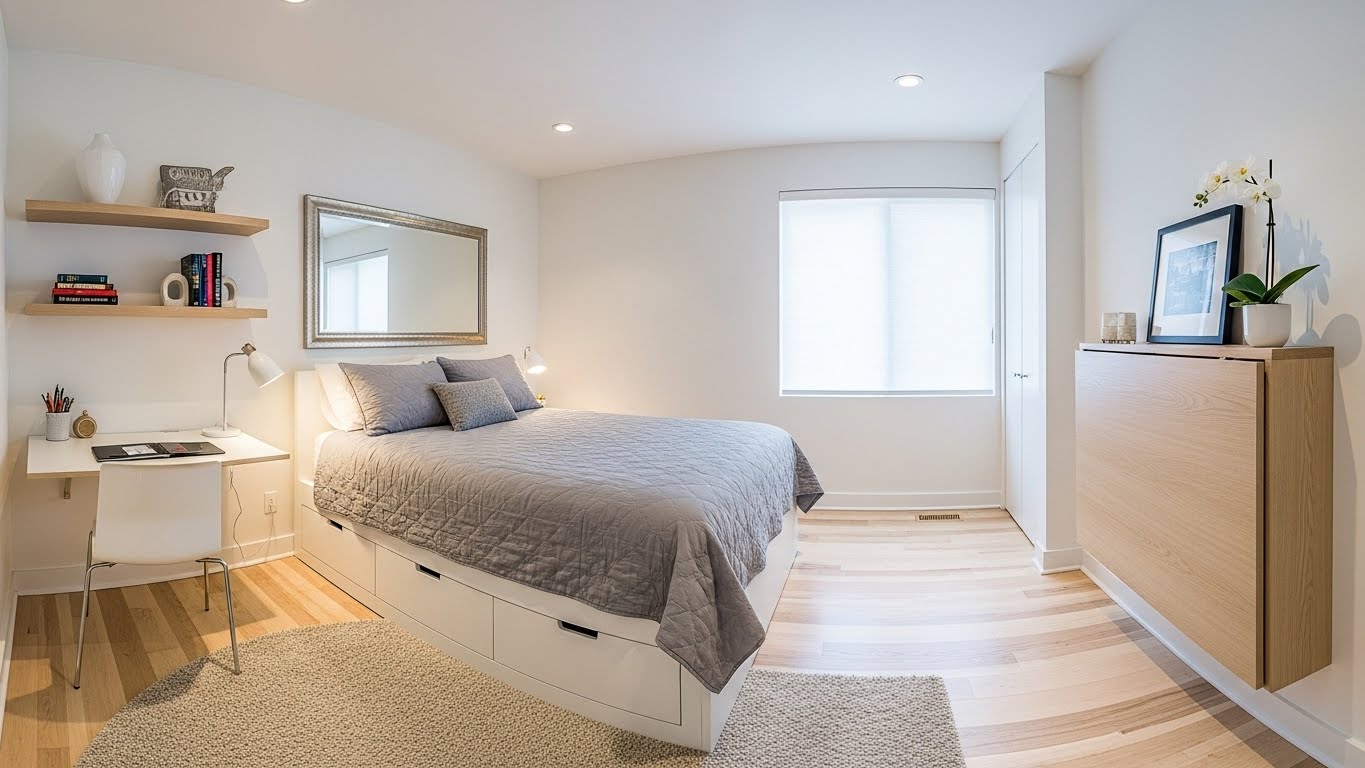
- Swap a wide nightstand for a narrow nightstand or a wall shelf.
Use fewer pieces, but make them work harder
- If possible, choose a bed with under-bed storage drawers or use storage bins underneath.
- Replace a large dresser with a tall, narrow dresser (vertical storage saves floor space).
- Avoid oversized accent chairs/benches—use a small stool or ottoman with storage instead.
Make the bed fit the room (not the other way around)
- Leave a clear walking path on at least one side of the bed.
- If the room is extremely tight, consider pushing the bed to one wall and making it look intentional with a long pillow/throw.
2) Mirror Placement That Actually Makes the Room Feel Larger
Mirrors don’t “create space,” they bounce light and extend sight lines. The key is placement.
Best mirror spots
- Across from a window: reflects daylight and doubles brightness.
- Next to a window: still boosts light without reflecting clutter.
- Behind a lamp: amplifies warm evening light.
- Closet door mirror: saves space and adds function.
What to avoid
- Mirror facing a messy corner or laundry zone (it doubles the clutter).
- Mirror directly facing the bed if that feels uncomfortable for you (a lot of people don’t like it).
Size tip
- One larger mirror looks cleaner and more “expensive” than several small mirrors.
3) A Simple Lighting Plan (Layered Light = Bigger Room)
One ceiling light makes small rooms feel flat. Use three layers instead:
Layer 1: Ambient (overall light)
- If you have a ceiling light, use a bulb that feels warm but not yellow:
- 2700K–3000K is a safe range for bedrooms.
Layer 2: Task (reading / bedside)
- Use two matching lamps or two wall sconces if possible (symmetry feels calm and spacious).
- If your nightstands are tiny, consider clip-on lamps or plug-in wall sconces (rental-friendly).
Layer 3: Accent (soft glow)
- Add one warm accent light:
- LED strip behind the headboard
- Small table lamp on a dresser
- Floor lamp in a corner
This removes harsh shadows and makes the room feel deeper.
Pro tip: Put lights on a dimmer plug or smart plug so you can control brightness easily.
4) Extra Tricks That Make a Huge Difference
Keep your color palette tight
- 2–3 main colors max (example: warm white + light wood + black accents).
- Too many colors break up the room visually and make it feel smaller.
Use curtains correctly
- Hang curtains higher than the window and let them fall near the floor.
- This makes ceilings feel taller—even in a tiny room.
Use a rug that’s big enough
- A too-small rug makes the room feel choppy.
- Ideally, the rug should extend beyond the bed so it frames the space instead of floating.
Declutter the “eye level zone”
- Keep the area around your bed and dresser clean (surfaces matter most).
- Hide small items in drawers or bins to reduce visual noise.
Tiny Bedroom “Bigger Look” Checklist
- ✅ Furniture with legs + slim profiles
- ✅ One large mirror reflecting light (not clutter)
- ✅ 3-layer lighting (ambient + bedside + accent)
- ✅ Simple color palette
- ✅ Curtains hung high
- ✅ Rug not too small