Small living rooms feel “tight” for three reasons: the walkway gets blocked, the furniture doesn’t point at a clear focal point, and the rug is the wrong size (usually too small). Fix those three and the room instantly feels bigger.
1) Start With Traffic Flow (The #1 Rule)
Goal: create a clear “path” people can walk without turning sideways.
Easy guideline
- Keep a main walkway open and consistent from entry → seating → hallway/door.
- If possible, leave about 30 inches for the primary path. If your room is tiny, even 24 inches can work—just stay consistent.
Common mistakes
- Coffee table too far from sofa so people cut through between furniture
- Accent chair placed where the walkway should be
- Big ottoman blocking the only path
Quick fix
- Pull furniture closer together into a “conversation zone,” and keep the edges open for walking.
2) Pick ONE Clear Focal Point
Your layout should “face” something:
- TV
- Fireplace
- Big window / view
- Statement art wall
Choose the strongest one (usually TV/fireplace). Then:
- Center your main seating (sofa) toward it.
- Place secondary seating (chairs) angled toward both the sofa and focal point.
Pro tip: If you have both a fireplace and TV, decide which is the “main” one and treat the other as secondary (don’t split the room in half trying to face both equally).
3) Use One of These 3 Small-Room Layouts
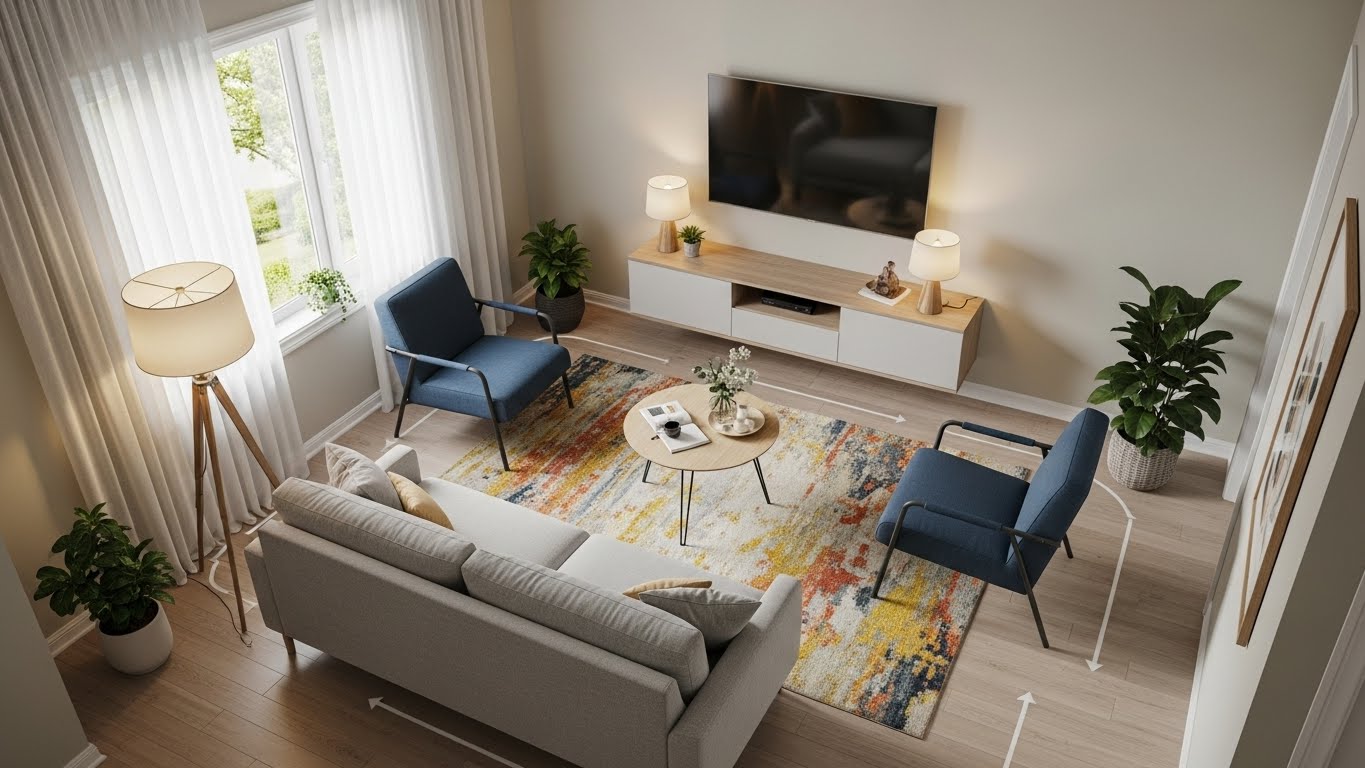
Layout A: “Sofa + 2 Chairs” (Most Balanced)
- Sofa against the longest wall (or slightly floated if you can)
- Two chairs opposite or angled
- Coffee table centered
Best for: conversational feel + small-to-medium rooms.
Layout B: “L-Shape / Sectional” (Best for Lounging)
- Sectional along two walls, or one wall + floating short side
- One accent chair only if it doesn’t block flow
- Keep the coffee table compact (or nesting tables)
Best for: TV rooms and open-plan apartments.
Layout C: “Sofa + One Hero Chair” (Best for Tiny Rooms)
- Sofa along wall
- One statement chair in a corner angled toward sofa
- Small round side table + slim coffee table (or ottoman)
Best for: studios and very narrow living rooms.
4) Rug Sizing (This Is What Makes It Look “Bigger”)
A rug that’s too small makes everything look cramped and random.
Best practice in small living rooms
- Try to get the rug under the front legs of the sofa (and chairs if possible).
- The rug should visually “hold” the seating group together.
Quick cheat
- If your rug is small: move it forward so it sits under the coffee table and front legs of the sofa, not floating in the middle.
Rule to remember:
A slightly too-big rug looks better than a too-small rug.
5) Sofa Distance + Coffee Table Placement (Simple Numbers)
- Keep the coffee table about 14–18 inches from the sofa edge (close enough to reach drinks/remote).
- If space is tight: choose a round coffee table or nesting tables—they’re easier to walk around.
6) Make the Room Feel Larger (Without Buying Anything)
- Float the sofa a few inches off the wall if you can—it creates visual depth.
- Use furniture with legs (you see more floor, room feels airier).
- Keep tall pieces (bookcases, cabinets) to one wall so the room doesn’t feel boxed in.
- Add a mirror across from a window to bounce light.
7) Fast “Small Room” Setup Checklist
- ✅ One clear focal point
- ✅ Main walkway stays open (no zig-zag path)
- ✅ Seating grouped closer together
- ✅ Rug large enough to catch front legs
- ✅ Coffee table not too far / not too big
- ✅ One hero chair max if the room is tiny